Advantages & Disadvantages of 3U vs 6U

The form factor decision comes early, and it often sticks. Once you officially spec a 3U SOSA aligned chassis for a program, you're shaping every PIM selection, cooling approach, and upgrade path that follows. Get it right, and the system integrates cleanly. Get it wrong, and you're retrofitting workarounds six months before CDR, when changing direction costs real money.
Neither form factor wins outright. They're tools, and the right one depends on what your program demands. Here's what you need to know before you commit.
What You're Actually Choosing Between
Both 3U and 6U OpenVPX are defined under VITA 46, the foundational standard for VPX interconnect. The physical difference is straightforward: a 3U PCB measures 100 mm × 160 mm, while a 6U PCB measures 233 mm × 160 mm. In the air-cooled format, front panel height adds some height: 133 mm on a 3U versus 266 mm on a 6U, which makes them look like a clean 50/50 split on paper.
They're not. Once you account for backplane connector keep-outs and, for conduction-cooled designs, wedgelock clearances on both vertical edges, usable board real estate drops significantly. VITA Technologies put it plainly: on a conduction-cooled 3U PCB, usable area is roughly 70% of nominal.
A 2025 whitepaper from Raytheon and Mercury Systems published through The Open Group SOSA Consortium confirmed that a conduction-cooled 3U PIM carries only about 36% of the usable area of a 6U conduction-cooled PIM. That gap matters a lot when you're trying to fit a modern chipset, memory, and I/O onto one PIM.
SWaP and Physical Footprint
The industry default for new programs has been 3U, and the SWaP argument is the main reason. UAVs, ground vehicle sensor pods, turrets, and man-portable systems all run tight weight and volume budgets. A smaller PIM means a smaller chassis, a smaller backplane, and a lighter overall enclosure.
For a roughly six-slot system or fewer, 3U SOSA-aligned configurations consistently win on total system weight and footprint, and that advantage compounds on platforms where every kilogram counts.
Shock and vibration tolerance also favors 3U. A smaller PIM has less surface area to flex under mechanical load, which translates directly to better performance under MIL-STD-810 shock and vibration profiles. For systems that spend their lives on helicopters, wheeled vehicles, or in weapons bays, that stiffer geometry adds up over a program lifecycle.
Once you're above the six-slot guideline, and compute demands are high, the SWaP advantage erodes. A 3U system matching the performance of a 6U system often need more modules, perhaps another switch slot, and more power supplies to manage them — which adds weight and volume back in. The crossover point matters.
PCB Real Estate and Compute Density
This is where the 50/50 split breaks down. A conduction-cooled 3U PIM carries only about 36% of the usable area of a 6U conduction-cooled PIM, once you account for backplane connector keep-outs and wedgelock clearances on both vertical edges.
Modern fire control radar, SIGINT, and high-bandwidth EW processing require chipsets (Xeon D-class processors, high-density FPGAs, large memory arrays) that physically don't fit on a 3U PCB under those constraints.
A 6U PCB gives you room to put that compute density on a single PIM rather than splitting it across two 3U modules, which matters for latency, backplane traffic, and the number of slots your chassis needs to carry.
I/O and Optical Connectivity
A 3U PIM carries three backplane connectors (P0 through P2, totalling 40 wafers). A 6U PIM carries seven (P0 through P6, totalling 104 wafers). The SOSA Consortium's October 2025 analysis found that two 3U SOSA compute-intensive modules combined don't deliver the same 100GbE Data Plane I/O as a single 6U SOSA module. For programs running high-throughput sensor fusion or multi-beam radar, that isn't a minor gap.
Thermal Capacity
OpenVPX modules in the 6U size have an advantage in conduction cooling. The longer card edges and surface area make that cooling method a bit easier.
But liquid flow-through cooling per VITA 48.4 has been standardized for 6U only and supports over 350W per slot — for a deeper look at cooling options across both form factors, the Pixus guide to advanced cooling methods is worth reading.
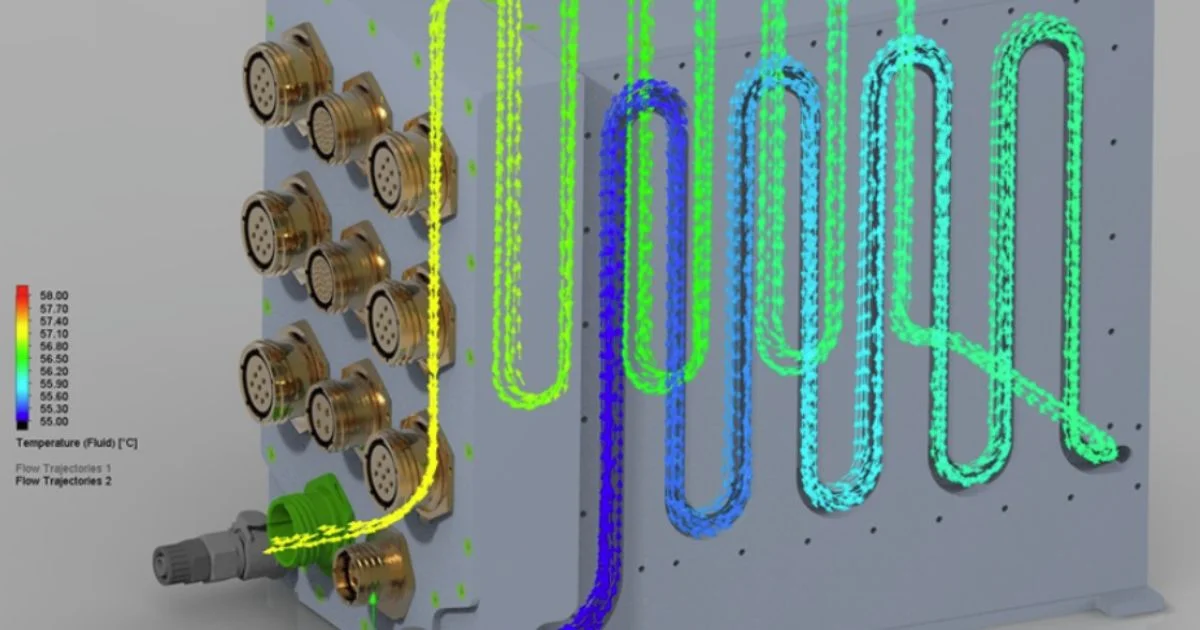
There's no equivalent LFT standard for 3U at this time. As AI inference workloads and high-density FPGA processing push module TDPs higher, that ceiling is becoming a program constraint rather than a future consideration. Liquid through the enclosure sidewalls is a beneficial approach for higher power systems.
Module Ecosystem
3U has the broader ecosystem right now. Module-level vendors have invested heavily in 3U payload, processing, and I/O modules aligned with the SOSA Technical Standard. You'll find broader selection, faster lead times, and more head-to-head competition among suppliers when you're building around 3U.
That competition matters for program cost, for schedule, and for your ability to swap vendors mid-lifecycle without a sole-source conversation.
The Interoperability Picture for Both Form Factors
SOSA alignment addresses a real problem: the historical incompatibility between modules from different vendors that forced programs into proprietary ecosystems or slowed integration time across multiple platforms. Both 3U and 6U configurations can be SOSA-aligned, and both benefit from the narrower, more consistent set of profiles defined under the SOSA Technical Standard.
It's worth being precise about what that means. SOSA alignment indicates intent to conform to those profiles; it doesn't guarantee plug-and-play interoperability across all vendors without integration effort. Profile compliance still needs to be verified at the system level and backplane design quality affects signal integrity regardless of which form factor you're working with.
The benefit is that SOSA-aligned systems start much closer to interoperability than legacy proprietary approaches, which reduces both programme risk and lifecycle upgrade costs considerably.
The SOSA Consortium's guidance is that VPX was never intended to be a one-size-fits-all standard. Low-to-moderate-performance applications (communications, navigation, EO/IR) fit naturally within 3U. High-throughput compute applications (SIGINT, fire control radar, and surveillance) are better served by 6U. Forcing everything into 3U because it's familiar isn't always the right path.
Mixed Form-Factor Systems Are an Option
Some programs don't fit neatly into one column. A system that needs compact processing nodes alongside a high-density radar processor doesn't have to choose one form factor for everything.
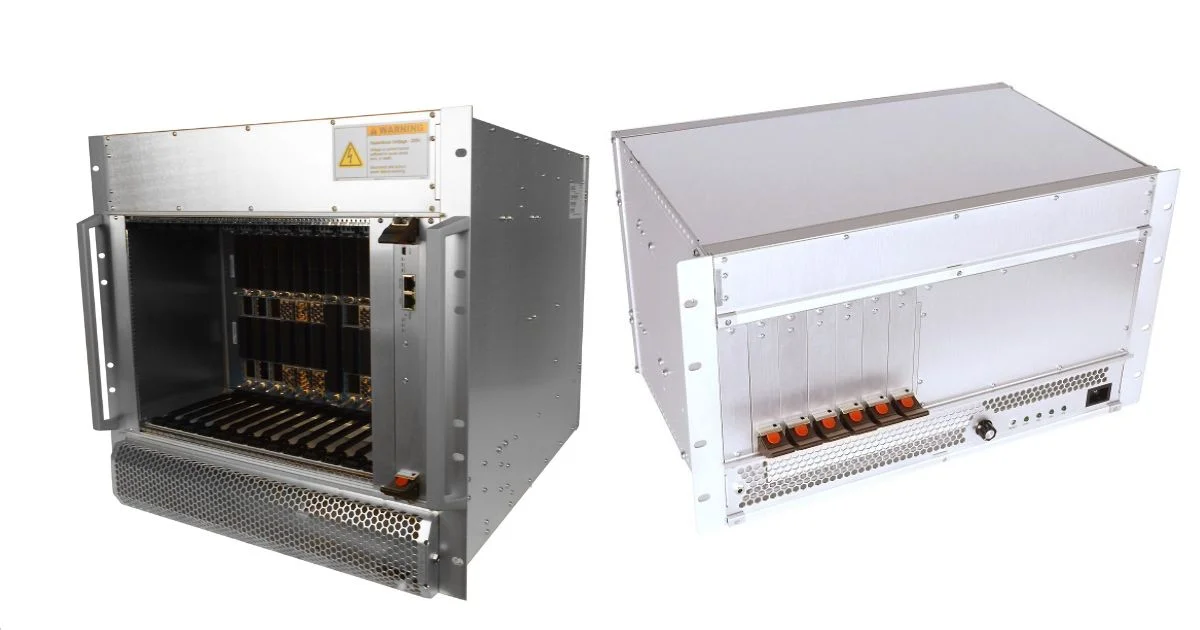
Horizontal-mount chassis configurations can conveniently support 3U and 6U boards in the same enclosure on a single backplane, with options for VITA 66 fibre optic and VITA 67 RF Connector Modules. This is because a 3U and 6U PIMs can sit side-by-side in line inside a 19” rackmount chassis. Of course, a vertical-mount approach is an option as well particularly for larger systems where more PIMs are required.
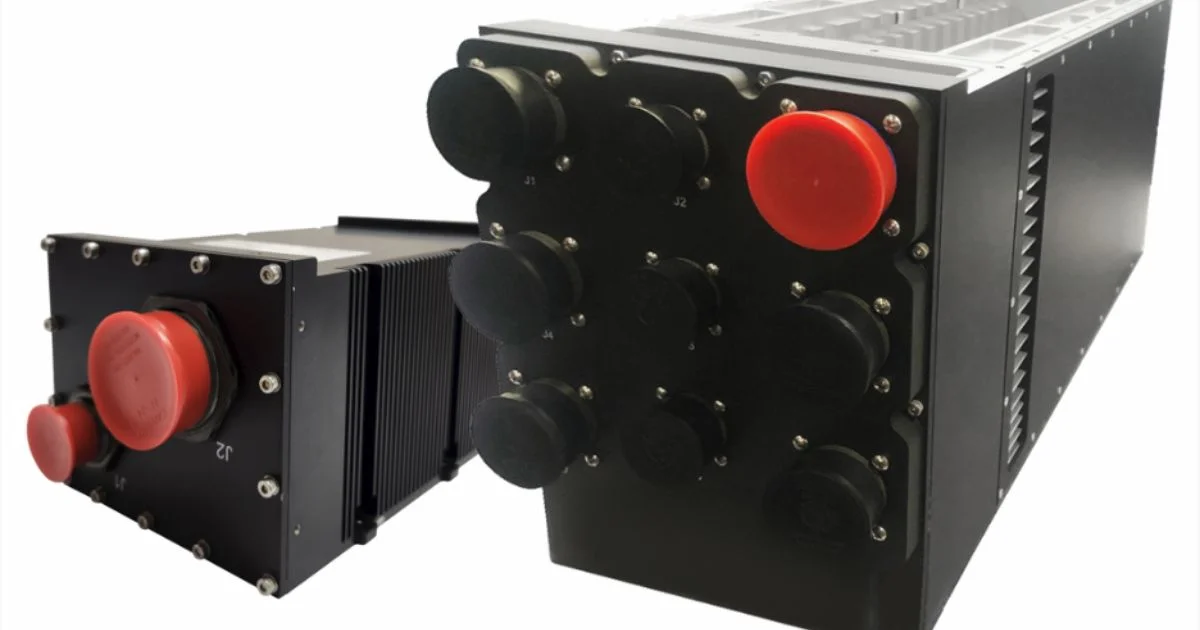
This lets program architects put 3U modules where SWaP dominates and 6U modules where compute density is the priority, without splitting into separate chassis and managing two independent systems. Pixus offers OpenVPX chassis in both 3U and 6U configurations, along with mixed-format options.
Is there a Standard Form Factor in Between 3U and 6U?
Eurocard form factors have come in 3U increments going back to the days of the Versa Module Europa bus or VME. 6U VME was the most common, but 3U sizes were possible for applications where there was enough board real estate for the technology at the time.
Even 9U backplane designs popped up from time-to-time. But today’s AI-based designs with powerful processors typically require more PCB real estate than is possible in a 3U PCB.
The 6U form factor is often overkill in size and not practical from a Size, Weight, and Power (SWaP) standpoint. So, for a future technology that is currently in draft work at the moment is VITA 100, where there will be 4U options in addition to the traditional 3U (note that the 3U is slightly taller) and 6U sizes.
Pixus has already developed some enclosures to accommodate the 4U module size.
Questions to Ask Before You Spec the Form Factor
Before defaulting to either option, walk through these:
What's the SWaP budget?
If the platform has hard weight or volume constraints, get specific numbers. Don't assume 3U fits until you've run the slot count, chassis size, and total system weight against the platform's actual limits.
What are the processing requirements?
Map your compute and I/O requirements against what a single 3U PIM can realistically carry. If you're splitting a function across two PIMs that could fit on one 6U PIM, that's extra integration risk, extra backplane traffic, and extra latency for no reason.
How is the system cooled?
Sealed deployments, liquid-cooled platforms, and systems requiring 2-level maintenance all pull in different directions. Know which cooling standard applies to your program before the chassis is specced, not after.
What does the module roadmap look like?
If your prime or subcontractors have committed to a specific form factor for future technology refresh, that's a constraint worth surfacing early. Switching form factors mid-program is expensive and rarely necessary with proper upfront planning.
Is RF or optical connectivity required?
RF Connector Modules (VITA 67) are available on both 3U and 6U, so RF alone rarely forces the form factor. Rear-panel optical is the harder constraint.
How many slots does the system actually need?
For six PIMs or fewer, 3U consistently wins on total system size and weight. Once you're above that threshold and compute demands are high, 6U starts making more sense both technically and economically.
The form factor conversation used to feel like a detail. It isn't. It shapes your module choices, thermal design, upgrade path, and long-term program costs, and it does so early, when changes are still cheap.
Both 3U and 6U rugged embedded systems built around SOSA-aligned OpenVPX profiles are mature enough for serious defence programs; the question is which set of constraints your specific program can actually live with.
Questions about form factor selection for a specific program? Contact the Pixus engineering team to talk through the requirements.