

High-performance embedded systems leave little margin for error. Before the design is even completed, we can provide a pathway to success for your mission-critical program.
Pixus Technologies integrates simulation and testing directly into our design workflow. We catch potential failure points early, helping to ensure that the physical hardware operates reliably in the field.
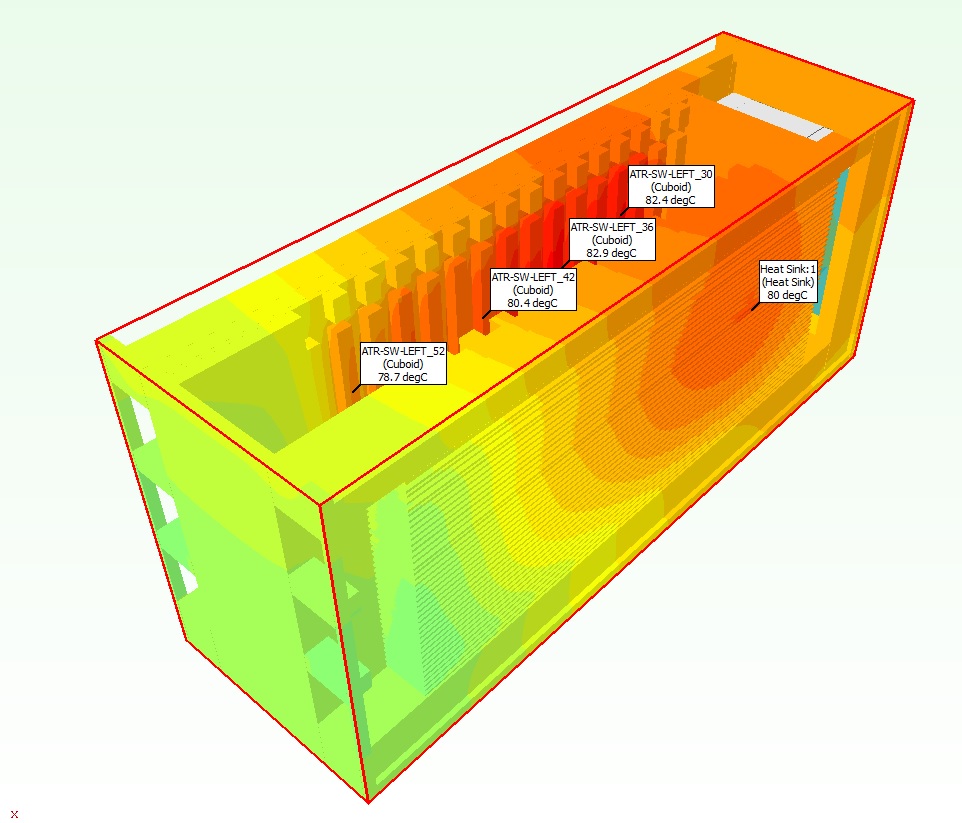
Thermal management presents a challenge as SOSA-aligned and OpenVPX systems increase in slot density and processing power. There are also applications where there may be up to 71℃ in ambient air temperature conditions to deal with. We utilize Computational Fluid Dynamics and similar techniques to model exact environmental conditions for "what-if" scenarios and mitigate hotspots early in the design phase. From there, we can select optimum fans for application and cooling requirement. Other techniques such as employing heatsinks, air plenums, blocker/deflectors, and special materials can help balance thermal management with other system requirements.
At the speeds demanded by modern defense applications, a backplane can be a source of signal loss and noise. We simulate the signal path to verify that high-speed data reaches its destination without corruption.
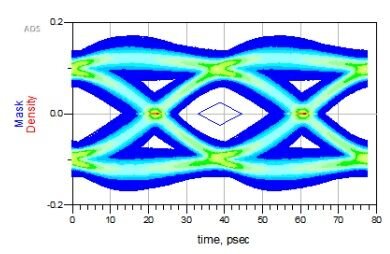
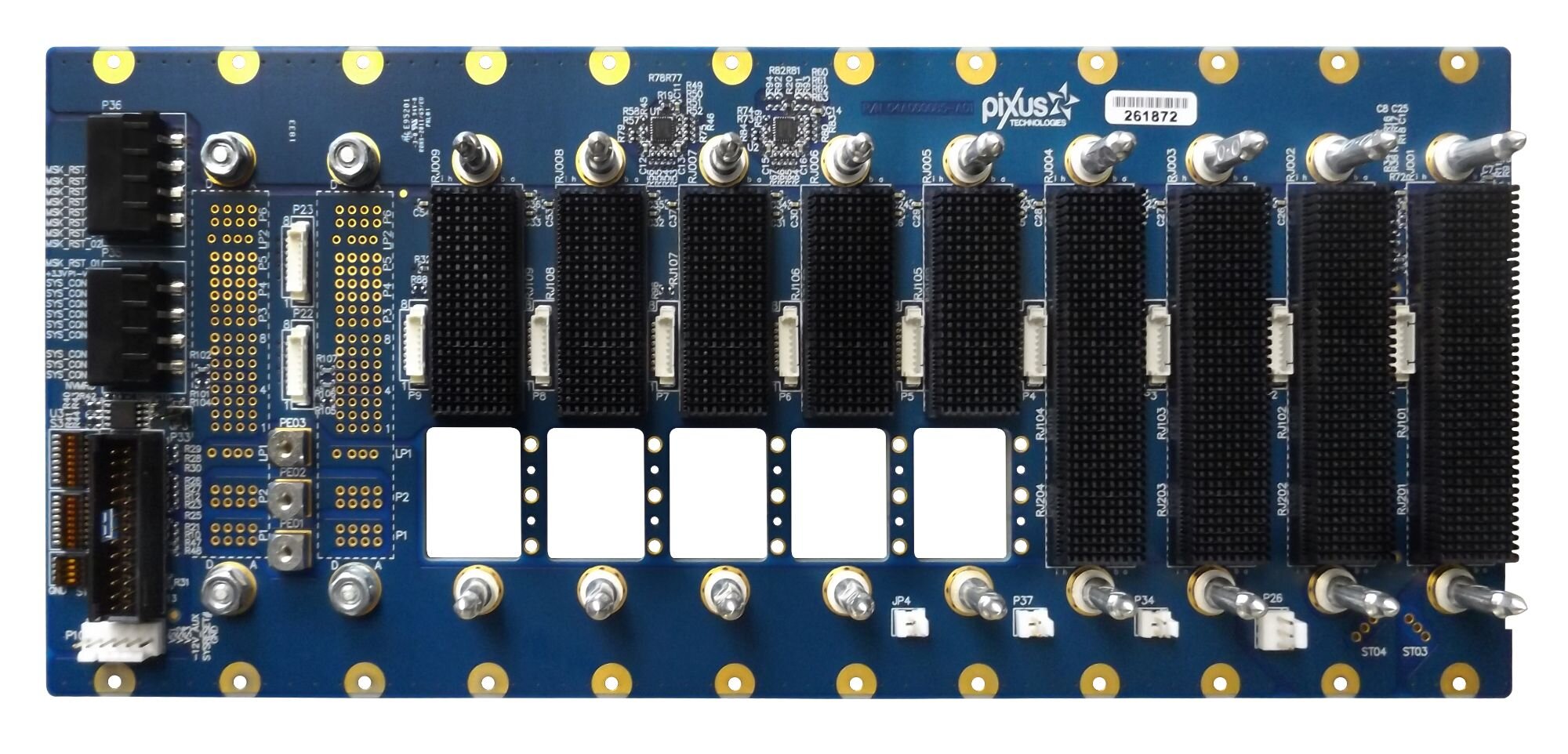
Mitigate crosstalk, jitter, and signal skew for signal at or above PCIe Gen 4/5 and 100GbE (25GBASE-KR4) speeds.
Map electrical network behavior at high frequencies (S-Parameters).
Reveal critical margins regarding bit error rates and noise (Eye Diagrams).
Pixus simulation and testing services are performed for your specific application and design specifications. These services help us ensure a pathway to success for the design.
No. Our simulation services are exclusively available to programs that utilize Pixus hardware platforms to ensure the integrity of the entire system delivered.
For thermal simulation, there is basic level of service for Pixus to simulate 2 scenarios of the following parameters:
Ambient temp
Ambient altitude
Card Thermal Load (wattage)
Basic thermal simulations report: This includes a report showing data of airflow and expected cooling results per slot (up to ~20 hours of billed time).
Additional scenarios: From there additional scenarios can be added for ~2 hours of billed time per scenario. For example, if you want to see the results of typical wattage 70W cards at a scenario at 50℃ ambient air, and also at 65℃ ambient air, those are the 2 scenarios. If you also wanted to look at the results of the cards at their max power of 85W at both ambient air levels, that is 4 scenarios for an approximate 24 hours.
Additional optimization options: Highly challenging thermal management project may require additional analysis to employ the proper combination of fans/CFM, static pressure, plenums/baffles/blockers, etc, to provide the optimal cooling. These efforts are typically in a range from 10-20 additional hours, with the report showing the various results.
For thermal testing, there are options for physical testing when Pixus has access to the PICs in the system. Typically, this is an option when Pixus provides the Level 4 integration of the system.
There are also options for Pixus to do the full channel characterization path for chosen backplane signals in Level 4 integration.
Both are these options are additional services, consult Pixus to discuss available options.