What is SpaceVPX?


Space programs have always had a compatibility problem. You pick the best processor from one vendor, the best RF module from another, the best controller from a third, and then spend months figuring out why none of them work together.
Custom interfaces, proprietary backplanes, integration work that eats budget before the mission even launches. It's a problem the defence industry spent decades solving for ground and airborne systems. Space is catching up.
SpaceVPX was built to fix that. If you're a program manager working on space avionics or evaluating chassis and backplane suppliers for an upcoming program, here's what you need to know.
SpaceVPX Builds on a Foundation That Already Works
SpaceVPX is formally defined in the VITA 78 standard, published by the VITA standards organization. It takes the OpenVPX (VITA 65) architecture, already proven across thousands of rugged defence programs on the ground and in the air, and extends it for operation in space.
The decision to build on OpenVPX wasn't arbitrary. VPX already supports 3U and 6U form factors, already handles conduction-cooled chassis designs, and already has a mature supply chain behind it.
Starting from scratch would have meant years of development with no existing ecosystem. Starting from OpenVPX meant inheriting decades of proven interconnect standards while layering in what space actually demands.
What does space require that ground-based VPX doesn't address? Three things mainly, and each one has real consequences for how you specify hardware.
Radiation: The Failure Mode Ground Programs Don't Face
On the ground, military electronics are subjected to shock, vibration, humidity, and temperature extremes. Those are well-understood problems with well-understood solutions. In space, you add radiation, and it's a different category of threat.
Total ionizing dose accumulates over a mission's lifetime and degrades semiconductor performance in ways that are hard to predict and impossible to reverse. Single-event effects can cause immediate, mission-ending failures in electronics not designed to handle them.
SpaceVPX addresses radiation at the architecture level, specifying connector materials and design requirements that meet NASA and ESA outgassing standards. Ground-based VPX simply doesn't need to go there.
This matters for chassis and backplane selection because radiation requirements flow down to every component in the system. Suppliers without space program experience may not fully appreciate how far those requirements reach, or how early in the design process they need to be addressed.
Thermal Management When There's No Air
Forced-air cooling works well on the ground. In a sealed ATR enclosure at altitude, it gets more complicated, but you still have some atmosphere to work with. In space, there's nothing. No convection, no fan-driven airflow. Every watt of heat has to travel through physical contact, from the board through the card edge and into the chassis structure.
That puts conduction-cooled chassis design in a different position than it occupies in a ground-based rugged system. On the ground, conduction cooling is one option among several. In space, it's the only option, and the mechanical interface between boards and chassis carries the entire thermal load. If that interface isn't right, the heat has nowhere to go.
Thermal failures in space aren't a field fix. They're typically a mission loss. The margins have to be built in from the start, not patched during qualification testing. Chassis suppliers with with serious experience in conducting cooled systems from ground-based defence programs are better positioned here, but space adds another layer of requirement that not every vendor has worked through.
Fault Tolerance: Designing for No Second Chances
You can't send a technician to fix a satellite. That single fact shapes everything about how space avionics systems have to be designed, and it's one of the most significant ways SpaceVPX diverges from standard OpenVPX.
SpaceVPX introduces a Space Utility Management (SpaceUM) module architecture and dual-redundant power distribution that standard OpenVPX doesn't include. The VITA 46.11 system management standard forms the foundation, but SpaceVPX expands on it significantly to handle fault detection and isolation.
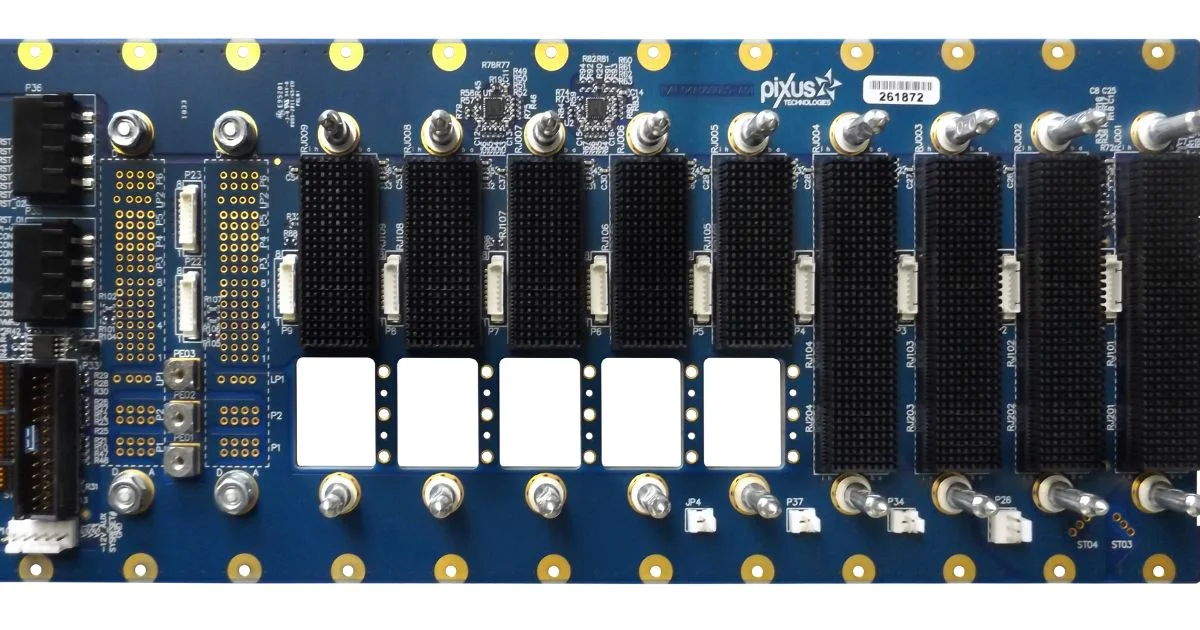
That dual-redundancy requirement flows directly into backplane architecture. Routing utility signals to every slot in a fault-tolerant configuration is a meaningfully more complex design problem than standard OpenVPX backplane work.
Program managers should understand that "OpenVPX experience" and "SpaceVPX experience" aren't interchangeable. The materials and design requirements for space applications require additional knowledge and skills.
The Interoperability Gap and Where SOSA Fits In
Here's the honest complication with SpaceVPX: the standard is flexible. Maybe too flexible. VITA 78 permits so many slot profile permutations that two modules with identical profiles still might not communicate if they're running different protocols on the data plane.
A NASA interoperability assessment flagged this directly, noting that the current standard doesn't fully assure the cross-vendor interoperability that program managers need for practical hardware selection.
That's where the SOSA Consortium comes in. The same organization that narrowed OpenVPX choices for ground and airborne defence programs is now developing an interoperable variant of SpaceVPX within its reference architecture.
SOSA is adding value by promoting a narrowed set of reference architectures, reducing the number of permutations needed to implement a compliant system and making "aligned" mean something actionable for integrators. That work is actively ongoing, with NASA, industry, and SOSA collaborating on the specification.
Be clear-eyed about where things stand. SOSA space profile alignment today gives you a meaningful head start on interoperability and a healthier supply chain than fully custom designs. It doesn't yet guarantee plug-and-play compatibility. However, it's based on the proven OpenVPX core set of standards which have been used for mission-critical systems for over twenty years now.
SpaceVPXLite: When the Mission Is Smaller
Not every space application needs a full 6U SpaceVPX system. CubeSats and smaller spacecraft have tighter size, weight, and power budgets, less redundancy overhead, and simpler backplane requirements. SpaceVPXLite (VITA 78.1) was developed as a 3U companion standard to address exactly that segment.
SpaceVPXLite carries over the core SpaceVPX architecture but reduces interconnect redundancy and design overhead for platforms where SWaP is the dominant constraint. It focuses on the data, utility, and control planes without the full fault-tolerance architecture that larger mission require. For program managers working on smaller satellites or hosted payloads, it's worth confirming which variant is appropriate before writing requirements.
The distinction matters for supplier selection, too. A vendor capable of supporting full rugged space systems programs isn't automatically set up for SpaceVPXLite work. The backplane requirements differ enough that you want confirmed experience with the specific variant you're specifying, not just the broader standard family.
What the MOSA Push Means for Space Procurement
Both the DoD and NASA are applying Modular Open Systems Approach principles to space programs, for the same reasons they pushed on it for ground and airborne systems. As VITA notes, MOSA drove the industry toward architectures built on well-defined, widely accepted standards, and VPX was already at the centre of that shift.
According to the original SpaceVPX architects, the primary goal was to cost-effectively remove bandwidth as a constraint for future space systems — a direct application of that same MOSA logic. Proprietary spacecraft electronics are expensive to build, maintain, and upgrade. Programs locked into a single vendor's architecture pay a premium at every contract renewal.
SpaceVPX, and the SOSA Space work building on top of it, is the application of that MOSA logic to spacecraft avionics. It won't eliminate every integration headache. But it significantly reduces custom integration work, creates real competition among suppliers, and gives programs a credible path to hardware upgrades without full re-qualification.
The goal is to give designers the best possible choice to get the job done quickly, using higher-volume boards to realize economies of scale.
For program managers writing requirements now, specifying SpaceVPX alignment is increasingly the right call. The ecosystem is growing, the supply chain is maturing, and the SOSA interoperability work will only strengthen the case over the next few years. Getting ahead of that is easier than retrofitting it mid-program.
Pixus' Backplane and Design Experience
Pixus has experience with various backplanes for deep space missions, multiple ATR enclosures for LEO and GEO applications, and more. Our predecessor company, Kaparel, with much of the same core management team designed and manufactured the CompactPCI backplane that is currently on the MARS Rover. How many chassis vendors can say that have product on another planet?
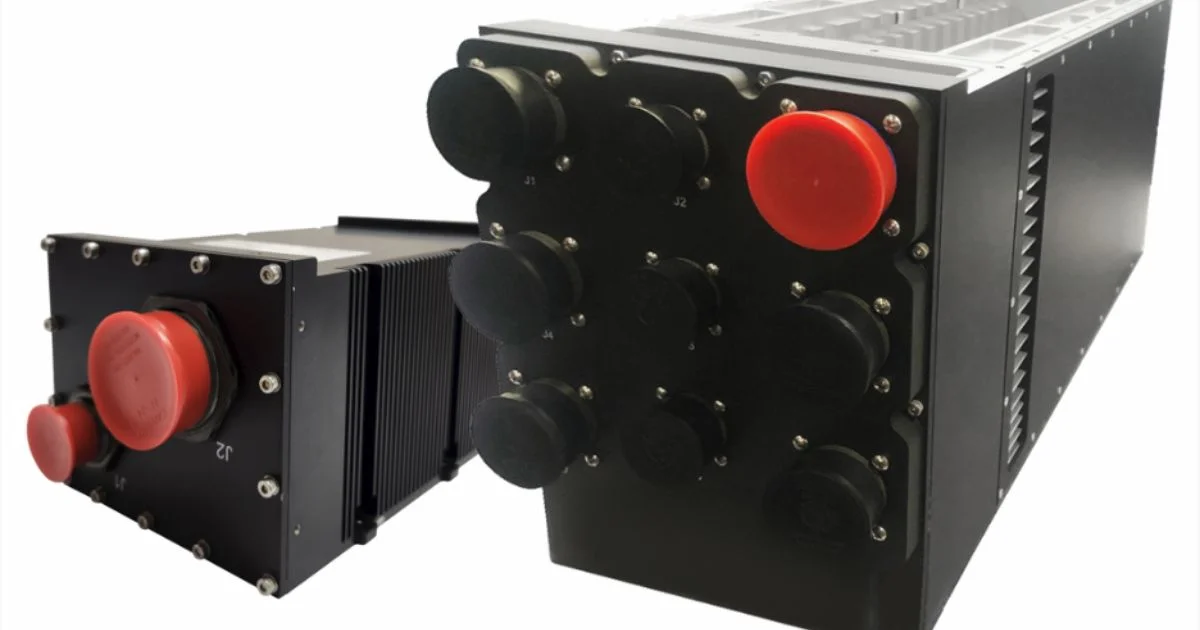
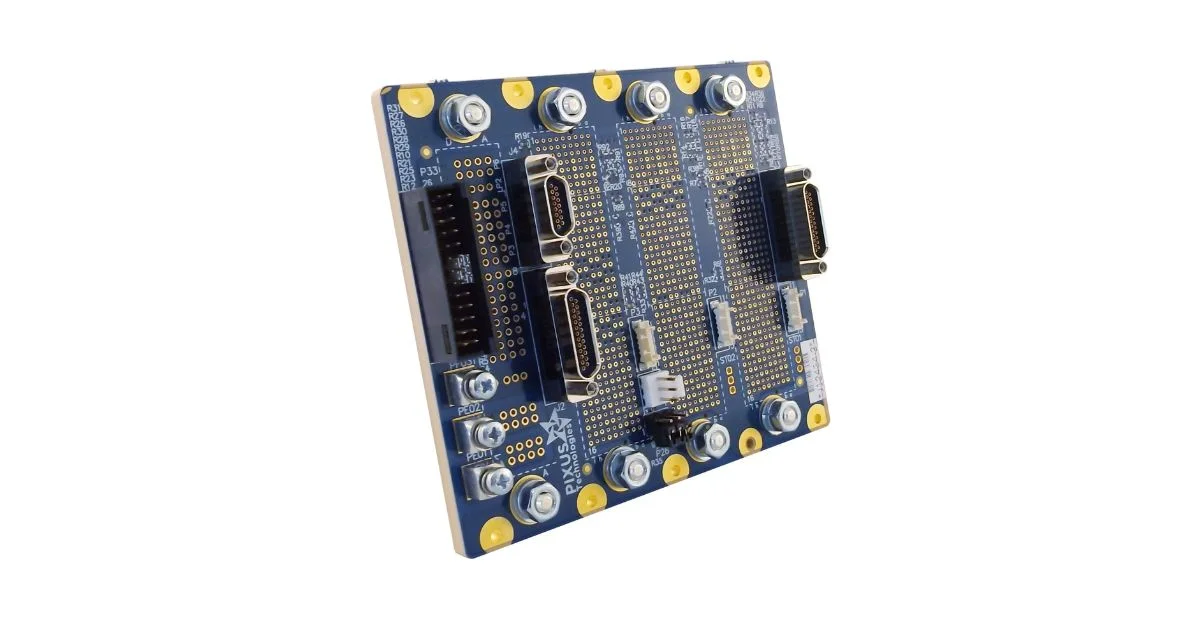
Pixus offers an OpenVPX chassis platform that supports both SpaceVPX and standard OpenVPX 3U processing boards, useful for programs that need to prototype and test on the ground before transitioning to space-qualified components. This includes a dual-depth chassis that allows the testing and development of both 160mm and 220mm depth boards in the same enclosure. The card guide options include VITA 78 compliant versions and standard VITA 48.2 card guides for conduction-cooled boards. Pixus also offers customizable SpaceVPX backplanes and enclosures for space.
Questions about SpaceVPX chassis and backplane options for your program? Contact Pixus Technologies to discuss your specific application.