

High-performance SpaceVPX systems engineered for survivability from LEO to Deep Space.
In the vacuum of space, traditional convective cooling is impossible, and component failure is not an option. Pixus Technologies provides the core infrastructure required to protect sensitive electronics in these extreme environments. Pixus has experience in VITA 78 SpaceVPX and other designs and specialized materials to build dependable hardware for in missions ranging from Low Earth Orbit to the Martian surface.
There are no service calls in deep space. We engineer hardware to survive the extreme vibration of launch and the harsh vacuum of orbit, ensuring reliability where maintenance is impossible.
Low Earth Orbit (LEO) & Geostationary Orbit (GEO)
Supports high-speed communications and Earth observation hardware.
Designed for long-term orbital stability and data integrity.
Deep Space
Reliability for programs where physical maintenance is impossible.
Our design team has developed backplanes currently in a system on the surface of Mars.
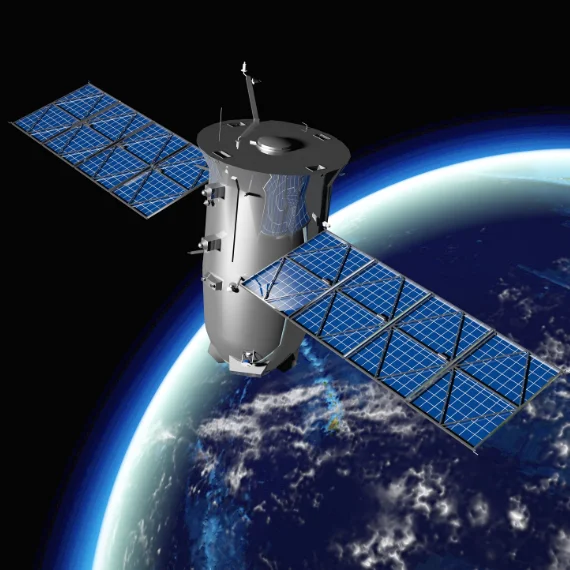
SpaceVPX (VITA 78) leverages the VITA 65 (OpenVPX) framework to provide the high bandwidth required for modern spacecraft.
Radiation Hardened Integrity
Materials chosen to resist ionizing radiation that degrades standard electronics.
High-Speed Data Transfer
Supports massive data throughput for remote sensing and ISR missions.
Fault Tolerance & Redundancy
VITA 78 profiles address specific power and bandwidth redundancy requirements.
Modular Scalability
3U and 6U VPX form factors allow systems to evolve as mission requirements change.
Conduction cooling is the primary strategy for space environments. We use detailed thermal simulation to ensure SpaceVPX modules efficiently transfer heat to the chassis walls and external radiators.
In a vacuum, materials can release volatiles that film over lenses and mirrors, compromising mission payloads. We mitigate these risks using rigorous control processes.
Material Selection: Materials meet or exceed NASA standards for Total Mass Loss (TML) and Collected Volatile Condensable Material (CVCM).
Controlled Manufacturing: Specific cleaning processes ensure backplanes and enclosures meet clean-room requirements for space-rated systems.
Pixus Technologies is ISO 9001:2015 certified, and our quality management system is compliant with AS9100D, the stringent standard required for the aviation, space, and defense sectors.
Solving high-wattage thermal challenges calls for collaboration. We provide direct access to our mechanical and electrical engineers to validate your cooling strategy and ensure signal integrity for high-speed AI payloads.
As a leader in SOSA™ and MOSA standards, we ensure your infrastructure is built on a future-proof foundation. This allows for rapid technology insertion, enabling you to upgrade processing modules without redesigning the chassis.
Deploy with confidence. Our hardware is designed to meet MIL-STD-810 for shock and vibration and MIL-STD-461 for electromagnetic compatibility, all built within ISO 9001:2015 and AS9100D-compliant workflows.
Selecting the optimal product architecture, format, and configuration for your application can be complex. Get direct access to our mechanical and electrical engineers to navigate these decisions. We’ll work together to find a solution that meets all your technical and program requirements.