Meeting AI Demands: How 3U VPX Packs More Power in a Smaller Footprint

3U VPX systems are packing server-class AI performance into postcard-sized boards. Learn how this form factor enables high-performance computing at the tactical edge.
Artificial Intelligence is fundamentally reshaping defense strategy. We are shifting processing power away from far-away command posts and moving it directly to the tactical edge.
However, bringing this level of computing power to the field presents a significant engineering challenge. Unlike the climate-controlled safety of a data center, embedded military systems must endure extreme temperatures, high vibration, and hostile electromagnetic environments. Modern strategies also prioritize smaller, more agile assets, like drones and tactical vehicles, over massive singular targets.
This creates a difficult conflict for system architects: how do you fit high-performance computing into platforms where space is practically non-existent?
The 3U VPX form factor (VITA 46/65) has become a key part of the solution to this problem. While larger formats like 6U still have their place, 3U VPX is seeing a resurgence specifically because it answers this need for density.
Why the Shift to 3U VPX?
For much of the Cold War and post-Cold War era, military electronics were designed for massive platforms like aircraft carriers, bombers, and tanks. In these environments, a computer system could afford to be large because the vehicle carrying it weighed tens or thousands of tons.
While 6U systems remain the standard for heavy platforms, and legacy VMEs still have a role to play, they are simply too large for the smaller and more lightweight platforms defining modern warfare. The resurgence of 3U is driven by the urgent need to deploy advanced capabilities, such as AI in deployed systems, Electronic Warfare (EW), and Intelligence, Surveillance, and Reconnaissance (ISR), onto platforms where traditional 6U systems cannot physically fit.
How Small Became Powerful
The shift toward 3U VPX would have been impossible without a corresponding leap in silicon technology. The resurgence of 3U is made possible by the relentless miniaturization of transistors; Moore's Law in action.
As chip fabrication processes have shrunk to 7nm and 5nm, the density of transistors on a single chip has exploded. This has brought in the era of the System-on-Chip (SoC) and System-in-Package (SiP).
Newer plug-in cards integrate disparate functions into a single piece of silicon. A single package can now house:
ARM processor cores
DSP engines
AI acceleration engines
High-speed memory interfaces
This integration renders the "real estate" penalty of the smaller 3U form factor irrelevant for many applications. A single chip on a 3U board can now perform workloads that previously required a rack full of discrete boards. If a mission profile requires only a fraction of the raw power of a massive 6U system, building a targeted solution with 3U boards is the more efficient, SWaP-optimized choice.
Solving the Heat Problem
As chips get faster and denser, they generate more heat per unit of surface area. Because of this, the resurgence of 3U VPX has relied heavily on reinventing how these systems are cooled. While traditional conduction cooling is reliable, it often cannot meet the thermal demands of today's high-wattage AI modules.
To break these thermal barriers, the industry has standardized three advanced cooling technologies:
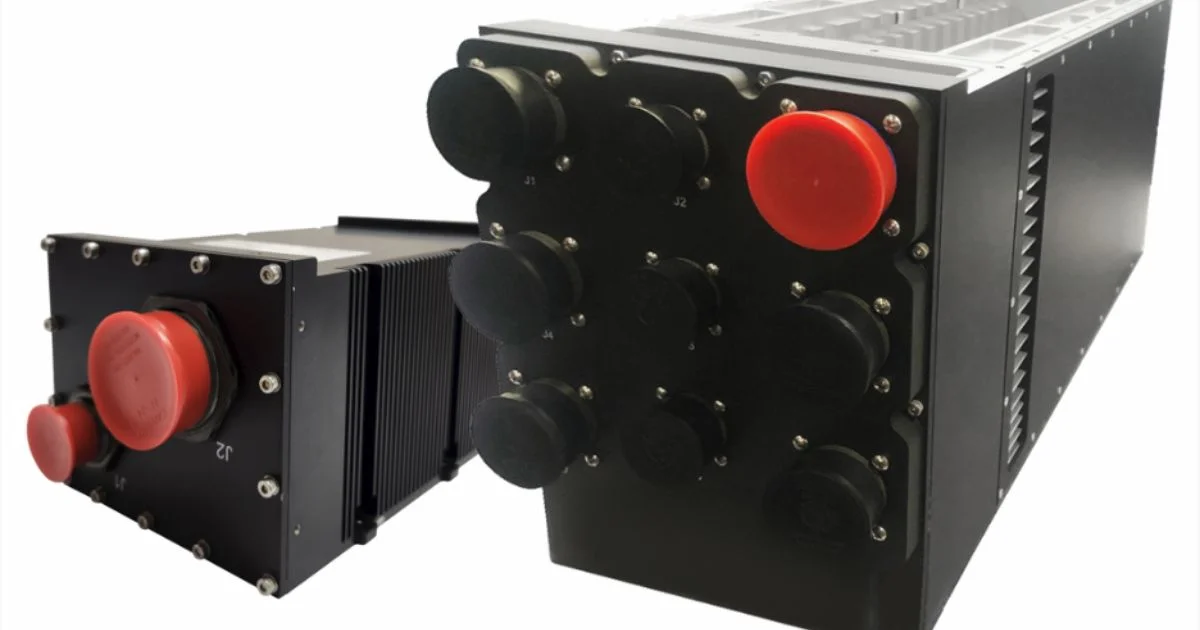
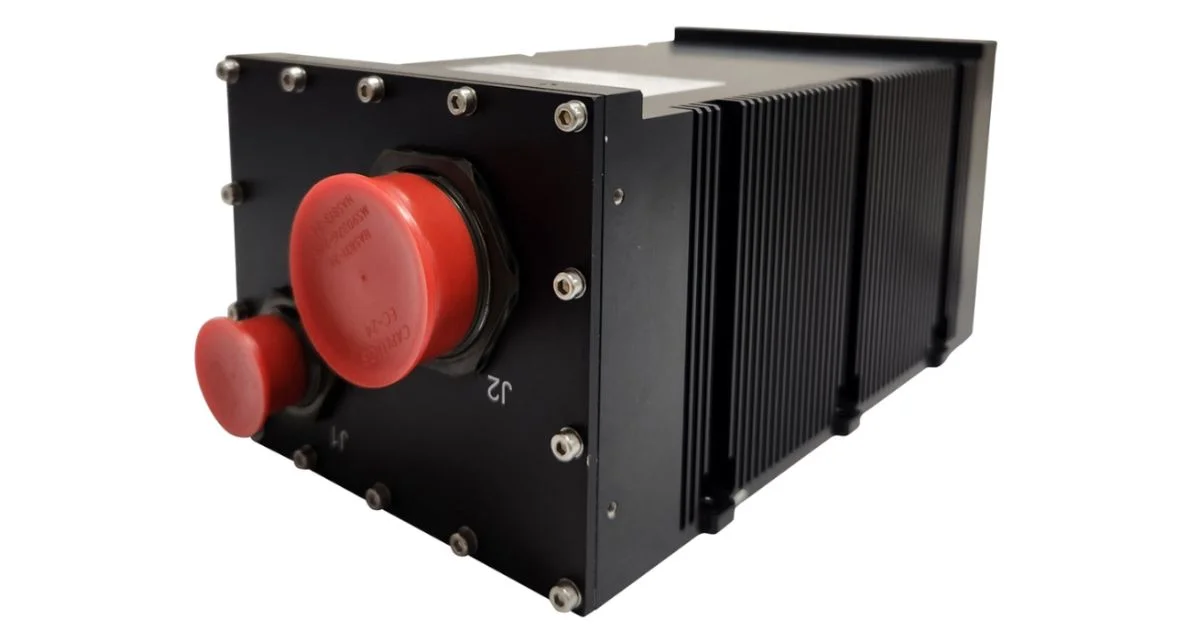
VITA 48.5 (Air Flow Through - AFT): This hybrid method directs air through an internal, isolated heat exchanger built into the module itself. Because the cooling air never touches the sensitive electronics, the module remains fully sealed. This allows high-wattage processors (~300W) to operate in sealed chassis without throttling.
VITA 48.4 (Liquid Flow Through - LFT): For extreme heat loads, LFT flows coolant (like PAO or seawater) directly through an integral heatsink built into the module. Liquid is much more efficient than air, with thermal conductivity more than 23 times greater, making it ideal for the most demanding applications.
Liquid Through Sidewalls: This method has liquid flowing through the sidewalls of the enclosure, while allowing the user to utilize common VITA 48.2 Conduction Cooled modules.
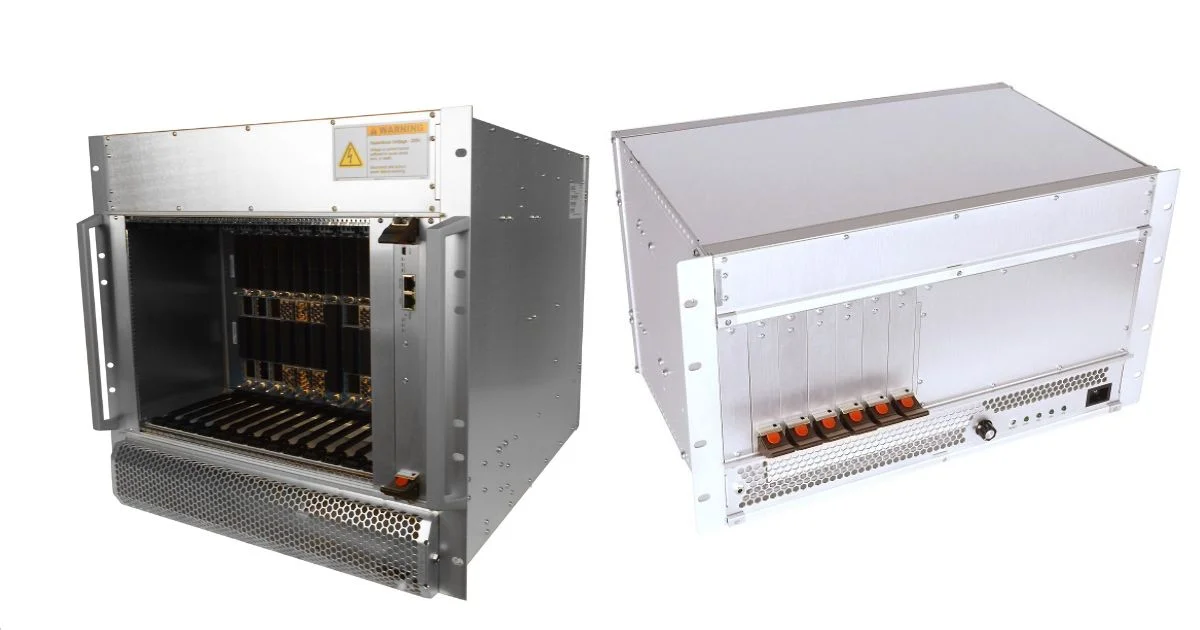
At Pixus Technologies, we offer a systems-level capability that includes forced air, conduction cooling, heat exchange with fans, and advanced AFT and LFT solutions.
We validate our designs using a "simulation first" approach. By utilizing advanced thermal simulation software, we model the system's performance before any metal is cut. This ensures that the chassis can dissipate the specific heat load of your high-wattage AI processors, mitigating risk and accelerating your development timeline.
Operational Use Cases for 3U VPX
The abstract benefits of "smaller, faster, and cooler" translate directly into operational advantages. The resurgence of 3U VPX is most visible in domains where distributed, high-performance computing is critical.
Electronic Warfare (EW)
Electronic Warfare involves controlling the electromagnetic spectrum, often utilizing rugged Software Defined Radios (SDRs) to jam enemy communications, disable drones, or confuse radar. Historically, powerful EW jammers required large trucks or dedicated aircraft to house the equipment.
Today, high-density 3U VPX cards allow these capabilities to be mounted on small tactical vehicles or even Group 3 drones. This allows a vehicle to know exactly where it is, even when enemy jammers are blasting GPS frequencies, replacing what used to be a large, dedicated navigation box.
Artificial Intelligence and Autonomy
Future conflicts will be fought at machine speed. Autonomous assets, such as drones, need to identify tanks, soldiers, or missile launchers instantly, without the latency of sending video feeds back to a human operator.
3U VPX modules now act as the AI "brain" for these platforms. Modern solutions integrate powerful GPUs to run deep learning algorithms that classify targets in real-time. Because these systems utilize the 3U form factor, this supercomputing capability fits into the payload bay of medium-sized drones that are simply too small to carry 6U systems.
Signals Intelligence (SIGINT)
Signals Intelligence involves listening to and analyzing enemy communications. Modern 3U VPX cards feature high-speed FPGA and optical interfaces that can ingest massive amounts of radio frequency (RF) data directly from antennas.
The shift to 3U allows these "listening posts" to be deployed in smaller, less conspicuous packages closer to the source, expanding the reach of intelligence gathering operations.
The Pixus Approach: Engineering for the Edge
While high-performance processor cards grab the headlines, the reliability of any deployed system depends entirely on the integrity of its core architecture: the chassis and backplane.
High-Speed Infrastructure
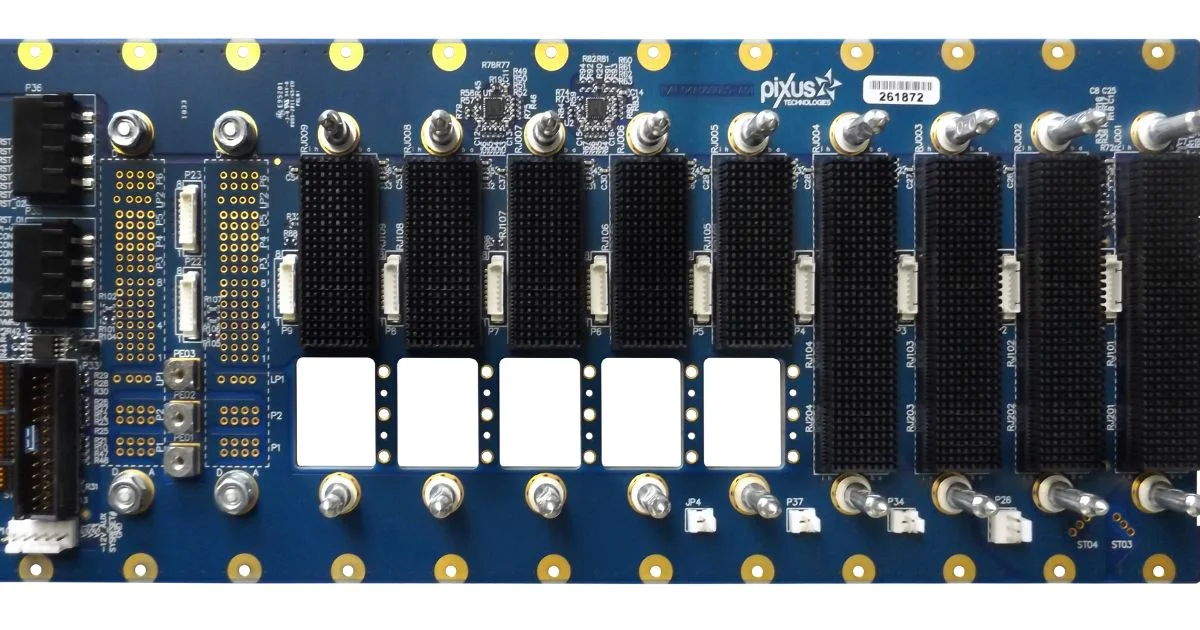
At Pixus Technologies, we engineer our high-speed backplanes to support the high-speed data rates required by modern AI and EW applications, including 100 Gigabit Ethernet (100GbE) and PCIe Gen 4/5 interconnects.
We utilize advanced connectors, such as MultiGig RT-3, to ensure signal integrity at these speeds. We also incorporate blind-mate VITA 66 (optical) and VITA 67 (RF) cutouts to support the complex I/O requirements of modern missions. Looking forward, we are already developing chassis solutions capable of accepting future VITA 100 boards.
Customization and Pre-Integration Services
We recognize that a standard COTS product doesn't always fit the unique constraints of every platform. That is why we specialize in "modified standard" solutions. We can take a proven design and modify it (adjusting enclosure depth, backplane routing, or I/O configurations) to meet your specific requirements without the high cost of a full custom build.
To further streamline deployment, Pixus offers pre-integration services. Our engineers can procure and test Plug-In Cards (PICs) from third-party vendors, ensuring they are fully compatible with our high-speed backplane and chassis before final assembly.
De-Risking the Design
To ensure reliability under mission-critical loads, Pixus can employ advanced thermal simulation software to model and optimize the system’s performance, validating that the chassis can dissipate the specific heat load before any hardware is built.
Additionally, we can support optional qualification testing for key military standards, including MIL-STD-810 (environmental), MIL-STD-461 (EMI), and DO-160 (airborne equipment).
Gain a Tactical Edge with 3U VPX
The 3U VPX form factor has evolved from a simple controller format into the primary computational engine of the modern battlefield. This shift is not merely a trend but a strategic necessity, driven by the requirement to deploy advanced AI, EW, and ISR capabilities onto distributed platforms where traditional 6U systems simply cannot fit.
This successful evolution is achieved through a technological "trifecta":
The architectural shift to serial VPX.
The density of modern SoCs allowing server-class performance on a postcard-sized board.
Innovations in advanced cooling like Air Flow Through (AFT).
At Pixus Technologies, we provide the ruggedized enclosures, high-speed backplanes, and thermal management expertise required to bring these capabilities to the field. Whether you need a standard COTS chassis or a modified design tailored to your specific mission, our engineering team is ready to help you solve your SWaP-C challenges.
Contact Pixus Technologies today to discuss how we can adapt our proven platforms to meet the requirements of your mission.