What Makes a Ruggedized Enclosure Truly Rugged?

If you work with electronics, you probably see the words “rugged” or “ruggedized” everywhere. It’s used so often in marketing that it’s easy to dismiss as a buzzword. But for high-performance embedded systems in military and aerospace applications, “ruggedized” really means something, and that meaning is critical to mission success.
True ruggedness isn’t determined by a specific feature, like a thicker or water-resistant chassis. It comes from a total system approach to design.
The goal is, in short, to deliver a reliable system in environments where a standard COTS system would quickly fail. And since no two environments are the same, rugged computing is not one-size-fits-all. A rugged enclosure that works perfectly in an aircraft cabin may be no match for the corrosive salt spray on a naval ship, or the abrasive sand of a desert ground operation.
What makes a ruggedized enclosure or chassis truly “rugged” is best understood by looking at the four primary threats that rugged design is meant to tackle—protection from environmental ingress, heat/humidity, mechanical stress, and EMI—and the standards that put rugged enclosures to the test.
Pixus Technologies offers one of the most expansive lines of high-performance SOSA aligned/OpenVPX chassis platforms, backplanes, chassis management and specialty products for rugged embedded systems. Contact us to discuss how solutions can meet your program's requirements.
Elements of Rugged Design
Protection from Environmental Ingress
Thermal Management
Shock & Vibration Resistance
Electromagnetic Compatibility (EMC)
1. Protection from Environmental Ingress
Dust, water, and other contaminants can quickly damage or destroy sensitive electronics. A rugged enclosure’s first job is to keep those foreign substances out.
2. Thermal Management
The challenge of thermal management comes from two sources:
The ambient heat of the environment, whether that’s the scorching heat of a desert to the sub-zero temperatures of a high-altitude flight.
The heat generated by the system’s own internal components. High-performance computing produces substantial heat, and this is only growing with the increasing use of power-intensive AI and edge computing. The demand for more computing power is not slowing down any time soon.
There isn’t a single cooling method for every rugged system. The best approach depends on the enclosure's design and its purpose. The strategy for a small, fully sealed ATR enclosure will be very different from that of a large, high-performance rackmount chassis.
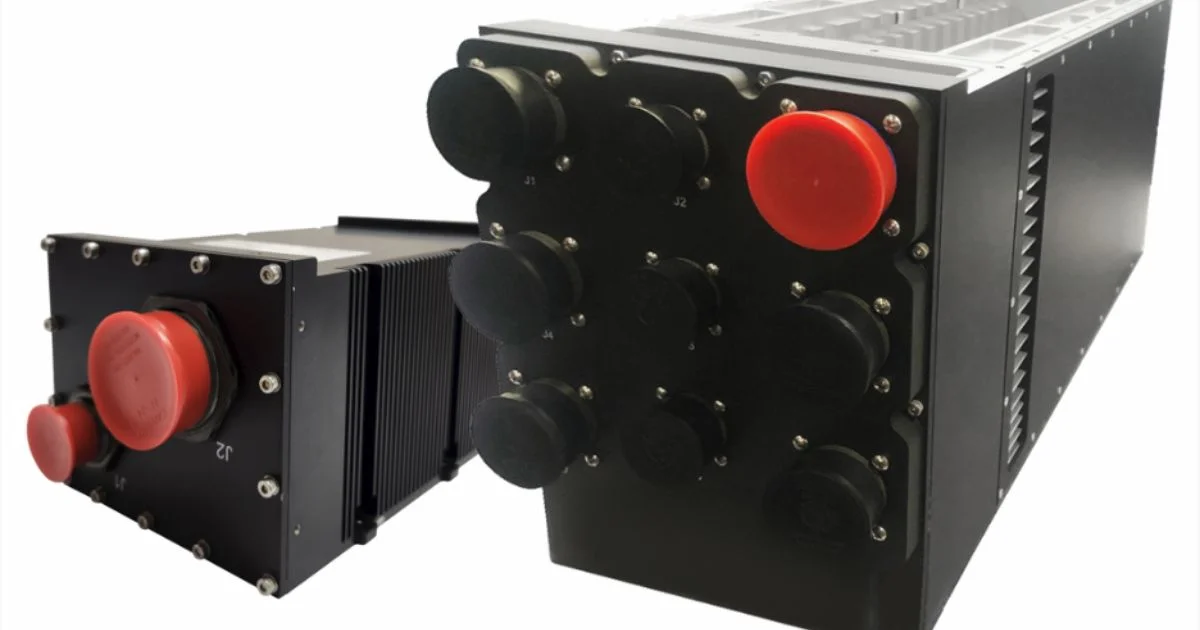
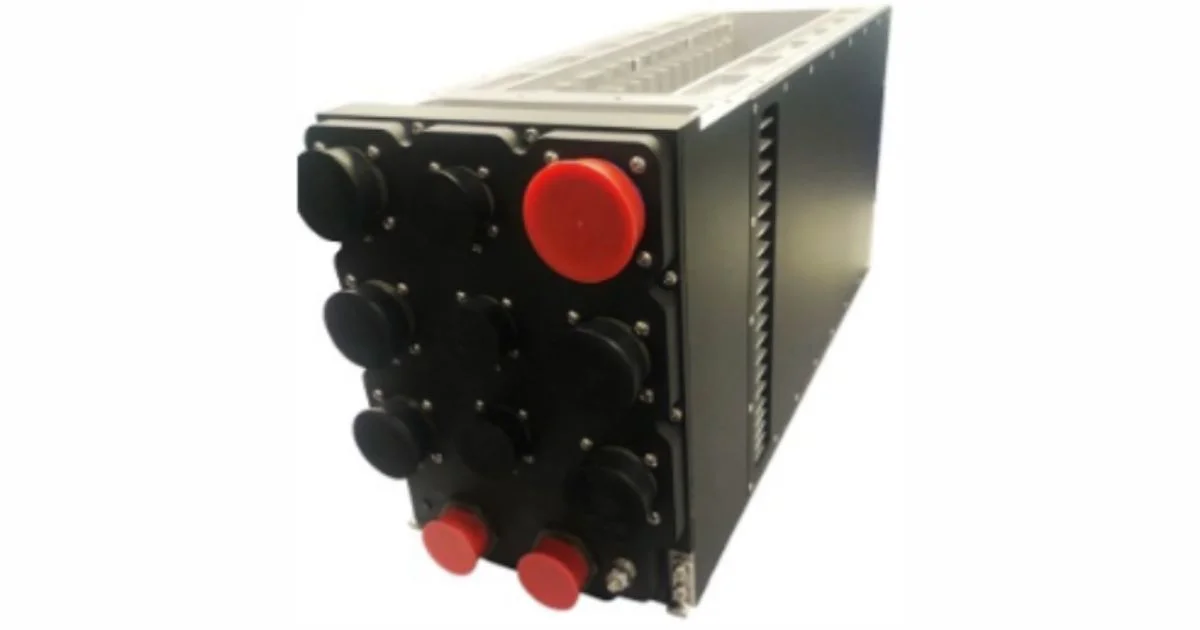
For systems that need to be completely sealed from the elements, the primary method is conduction cooling. This fanless cooling approach uses the enclosure itself to as a passive heat sink. It works by drawing heat directly from hot components via a thermally conductive metal path, transferring that heat through the path to the chassis walls, then radiating the heat from the chassis into the outside air. The chassis exterior may also have cooling fins to maximize its surface area, allowing it to shed heat more effectively.
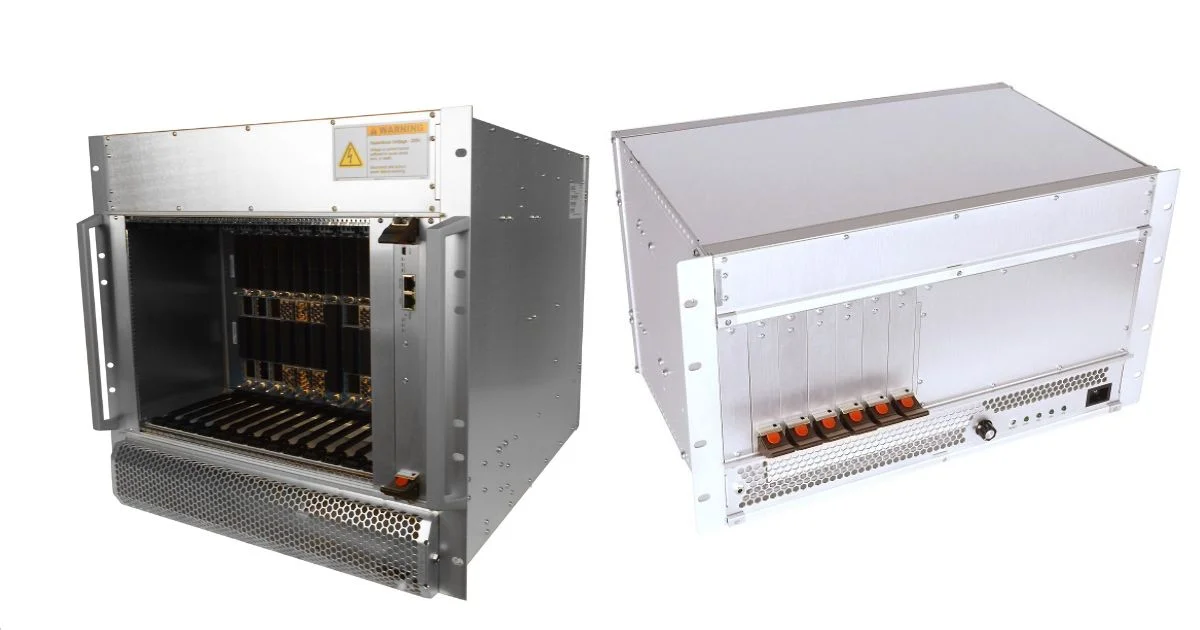
For high-power systems in a rackmount form factor, conduction alone may not be enough. Pixus has developed solutions for MIL rugged rackmount enclosures that leverage the VITA 48.8 standard. This air-flow-through (AFT) approach directs controlled streams of air through the core of the plug-in modules themselves, providing superior cooling directly to the highest temperature areas.
The company has also developed liquid-cooled designs, where the cooling (PAO, seawater, kerosene, other) liquid flows through the sidewalls. Ask about our latest SOSA aligned ATR versions.
Regardless of the method, these strategies are not based on guesswork. Modern rugged engineering relies on detailed thermal simulation to model and validate a design’s performance. This ensures the system can handle its specific thermal load long before any hardware is ever built.
3. Shock & Vibration Resistance
In the field, embedded systems are constantly exposed to mechanical stress, which generally falls into two categories:
Vibration, the persistent, high-frequency energy a system endures, originating from sources like vehicle engines, industrial machinery, or the airflow over an aircraft’s fuselage.
Shock, which refers to a sudden, high-energy impact resulting from events like drops, travel over rough terrain, or the concussive force of a nearby explosion.
The intensity of these forces varies by application. A system embedded in a ground vehicle will face constant vibration. Shipboard systems need to withstand the pounding of heavy seas, and potentially the shock from missile launches. Aerospace designs must account for the forces of landing, or the vibration from helicopter rotors.
A rugged enclosure must be purposefully engineered and then rigorously tested to meet specific benchmarks for shock/vibration, and environmental effects of the application. Many of Pixus’ designs have gone through MIL-STD-810 or DO-160 testing. Pixus can customize a solution for your application based upon these proven base platforms.
4. Electromagnetic Compatibility (EMC)
Electromagnetic interference (EMI) is an invisible but important threat. Modern systems operate in dense electronic environments, surrounded by a constant chatter of signals. For applications like radar, signals intelligence (SIGINT), and Electronic Warfare (EW), managing this electronic noise is essential.
The practice of managing EMI is called Electromagnetic Compatibility (EMC). EMC shielding is meant to be both a “fortress” and a “good neighbor”, in the sense that it:
Protects internal components from external signals, and
Contains its own electronic noise to keep from interfering with nearby systems.
A rugged enclosure built for EMC works as a Faraday cage, isolating the internal electronics from the external electromagnetic world. This is achieved using conductive chassis materials, specialized coatings, and EMI gaskets to seal every gap and seam where radio frequency (RF) energy might leak.
Like other aspects of ruggedization, claims of performance require proof. A system’s true EMC should be validated through testing against an established benchmark. The primary standard in this domain is MIL-STD-461.
Ruggedization is Application-Specific
Given the many different challenges a rugged system can face, it’s natural to wonder: “Why not just design an enclosure that’s impervious to everything?” A perfectly sealed, liquid-cooled, bomb-proof chassis that could handle any threat imaginable?
It’s a bit like the old joke that asks, “If the airplane’s ‘black box’ is indestructible, why not make the entire plane out of that material?” Answer: because the interstates aren't wide enough. In other words: that plane will not fly.
Every design decision involves a series of trade-offs. We often analyze this through the lens of SWaP: Size, Weight, and Power (sometimes known as SWaP-C, adding Cost). These are the constraints of almost any military or industrial program.
For example, making the chassis walls thicker increases the system’s weight, something we want to avoid in aerospace applications. Adding a powerful liquid cooling system could make the build too large or cost prohibitive. It’s a balancing act to design a system that is both rugged and practical.
With that in mind, a truly effective rugged enclosure is one that meets its specific application requirements. And since the requirements for a stationary ground radar system are vastly different from those for, say, equipment mounted to a helicopter, ruggedization for the two will look very different as well.
How Standards Set the Bar for Ruggedness
If ruggedness is application-specific—so different from one instance to the next—how can a buyer be sure any particular enclosure is truly up to the task?
The answer is found in standards. To be considered ruggedized, a piece of hardware must often be tested against multiple standards. But it’s important to understand that these standards don't tell an engineer how to design a product; instead, they define the specific environmental conditions and performance tests that the product must pass to claim compliance.
For military and defense applications (and any commercial applications that can credibly claim “military-grade”) the following standards are frequently used to verify performance:
MIL-STD-810 is the benchmark for performance against environmental stresses like shock, vibration, and extreme temperatures.
MIL-STD-461 validates a system's electromagnetic compatibility (EMC).
When dealing specifically with the U.S. Department of Defense, a major strategic initiative known as the Modular Open Systems Approach (MOSA) also comes into play. MOSA is a mandate to move away from proprietary, "vendor-locked" systems to ones built from modular, interoperable parts that can be sourced from a wide range of suppliers. For years, OpenVPX has been the de-facto standard for MIL grade ruggedized computing sysems. But OpenVPX provides a huge swath of options, so the Sensor Open Systems Architecture (SOSA) technical standard was geared to provide a more manageable subset of options. The benefit is more economies of scale, less integration and training time, a simpler approach while maintaining the flexibility that fosters innovation. It provides a common framework for building these interoperable systems. SOSA uses foundational standards like OpenVPX to define everything from mechanical dimensions and connector types to communication protocols.
As specialists in OpenVPX and the evolving SOSA Technical Standard, Pixus Technologies offers a wide range of SOSA aligned chassis platforms, backplanes, chassis managers, and other specialty products. Contact our engineering team to discuss how our standards-based solutions can meet your program's requirements.
Anatomy of a Ruggedized Enclosure
Ultimately, the ruggedness of an enclosure isn't defined by any one feature or even a set of features. Rather, it's defined by its proven performance in its intended environment. That performance is always the result of a disciplined engineering process that:
Starts with a clear understanding of the application and its SWaP constraints.
Considers environmental ingress protection, thermal management, shock and vibration resistance, and EMC as required for the application.
Leverage a vast array of proven base platforms and backplane designs, customizing and optimizing to the customer’s specific requirements.
Offer services to test/simulate/validate against objective standards.
If you're working through these requirements, the engineering team at Pixus Technologies can help. We can work with you to produce a SOSA rugged chassis or OpenVPX chassis that meets the demands of your application.