The Front Line of Drone Defense Why Rugged SDRs are Essential

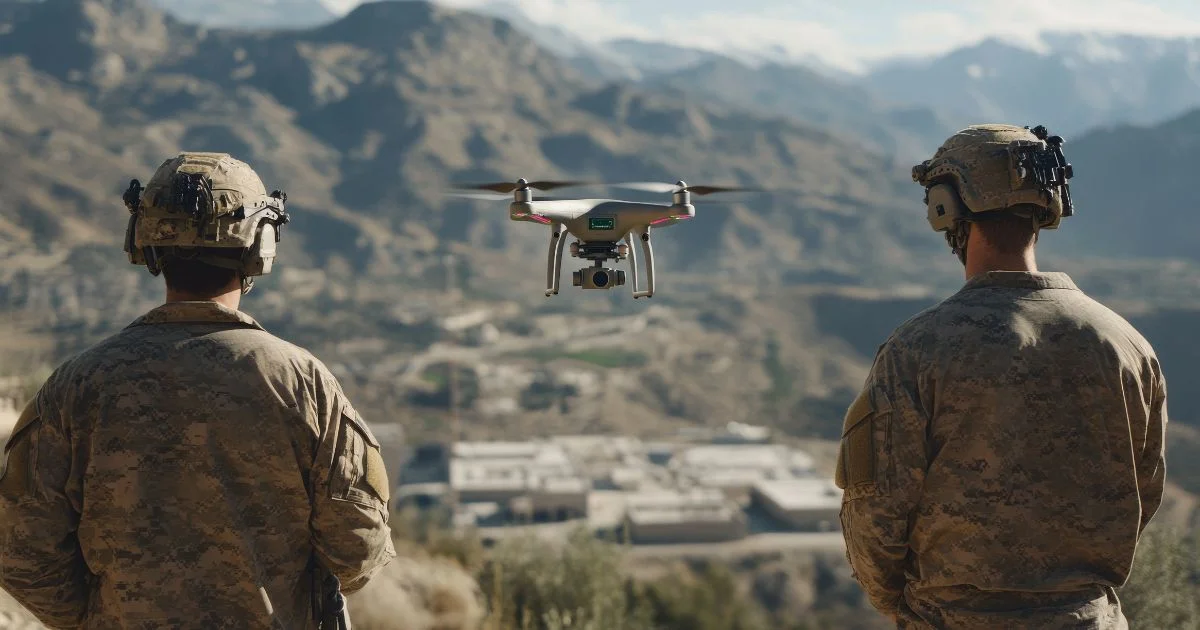
The rules of aerial defense have changed. The skies, once dominated by jets and helicopters, are now crowded with high-tech (and generally low-cost) drones.
Drones, technically known as Unmanned Aerial Systems (UAS), have become essential tools for intelligence gathering, precision strikes, and logistical support. In the Russo-Ukrainian war, for instance, it is drones, not heavy artillery, that inflict about 70 percent of all casualties on both sides.
This threat isn't confined to distant battlefields. In the United States, there are over 800,000 registered civilian drones and many more unregistered. While most are used for commercial or hobbyist use, they pose a growing threat to manned aircraft and infrastructure. NORAD and US NORTHCOM reported 350 drone detections over 100 different U.S. military installations in 2024 alone.
What’s more, conventional air defense systems struggle to counter drone threats. They’re small, fly low, and can attack in swarms, making them nearly invisible to standard radar. They also communicate across a wide and varied radio frequency (RF) spectrum, including common Wi-Fi Bands (2.4 GHz and 5.8 GHz ISM) for control and video transmission and, in the case of advanced or military-grade systems, extending into the C-band, X-band, or even Ku-band.
To counter this threat, modern defense systems rely on Software-Defined Radio (SDR). From civilian airports to active warzones, SDRs form the core of Counter-Unmanned Aircraft Systems (C-UAS) infrastructure.
But an SDR is only as good as the hardware protecting it. A high-tech radio is worthless if it can't withstand the harsh realities of the field. Ruggedization is what transforms SDR into a mission-ready asset for the front lines of drone defense in the U.S. and around the world.
What is a Software-Defined Radio (SDR)?
A Software Defined Radio is a radio that uses software rather than physical analog hardware to handle functions like filters, mixers, and amplifiers.
It captures analog radio frequency (RF) signals and converts them into a digital data stream. From that point on, all the complex signal processing (filtering, demodulating, and decoding) is performed by software running on powerful processors like FPGAs.
Because SDRs are defined by software, a single piece of hardware can be reconfigured on the fly. With a simple update, it can listen to new frequencies, adopt different protocols, or analyze new types of signals. Hardware that supports up to 6 GHz and up to 160MHz baseband bandwidth, with a wide dynamic range and real-time processing capabilities, are ideal for fast drone detection, classification, and response. The NI Universal Software Radio Peripherals have many benefits. These include seamless integration with NI LabVIEW and open-source frameworks like GNU for flexible development, MIMO and multi-channel support, synchronization with other USRPs, adaptable GPS and other real-time signal processing features.
C-UAS Requires a Multi-Sensor Approach
Drone defense is a layered, multi-step process. It involves detecting, tracking, and identifying a threat before ultimately neutralizing it. This sequence which is often called a kill chain.
Often, no single sensor can handle this entire process. Radar may struggle to classify a small drone or fail to detect one that flies low. Cameras have a narrow field of view and can be hampered by weather. And while RF detection is highly effective, it may not detect an autonomous drone that follows a pre-programmed flight path rather than receiving signals from a pilot.
This is why modern C-UAS systems combine data from multiple sources to build a clear and reliable picture for decision-makers.
The foundational layer is typically Radar, which offers long-range detection and continuous 360-degree coverage by scanning the sky with radio waves.
Once radar gets a hit, the system cues other sensors to provide positive visual identification. Electro-Optical/Infrared (EO/IR) cameras can provide daytime imagery (EO) or track a drone’s heat signature from its motors (IR), confirming the object is indeed a drone.
At closer ranges, sensitive Acoustic Sensors can add another layer by detecting the distinctive sound signatures produced by drone propellers and motors.
A final, critical layer is provided by Radio Frequency (RF) Analysis. SDR uses passive sensors to scan the electromagnetic spectrum for the command-and-control, video, and telemetry signals exchanged between a drone and its pilot.
All this information is fed into a central command system, which combines the data (using C-UAS software) to form a more complete picture of the airspace for the commander. Only then can they make the best and most informed decision on how to deal with the aerial threat.
SDR is an Essential Part of the C-UAS Kill Chain
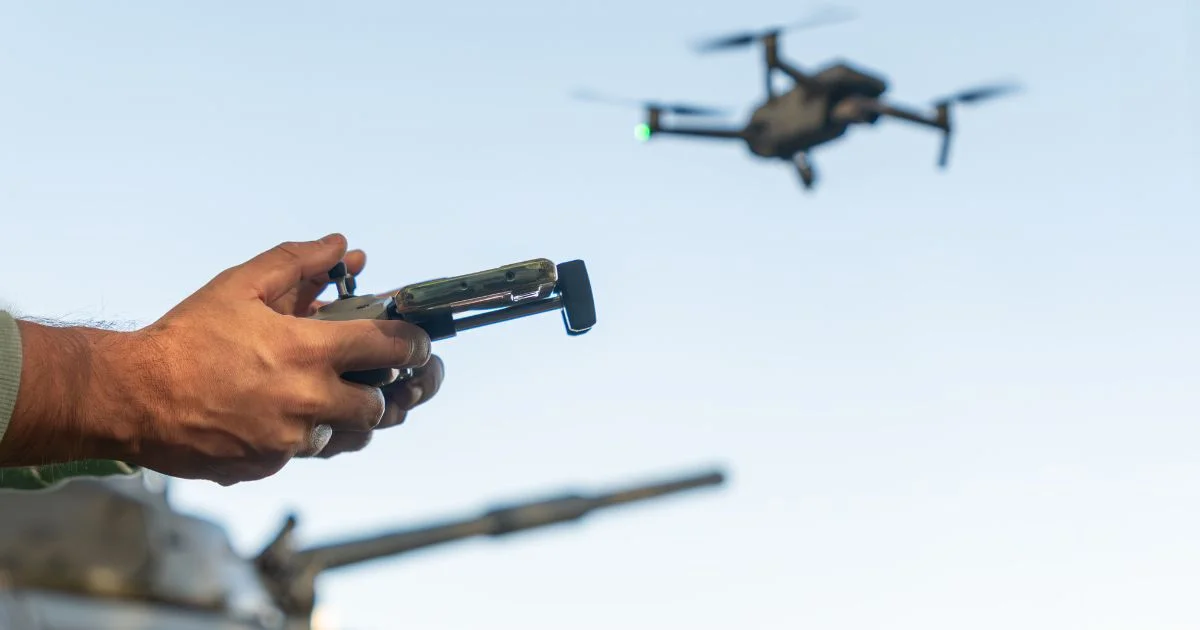
SDR can seamlessly perform three distinct jobs within the C-UAS kill chain: detection, identification, and “soft” neutralization.
1. Detection
A single SDR can monitor vast portions of the radio frequency spectrum at once, covering all the common bands used for a drone's control, video, and telemetry signals. It gives the operator broad situational awareness, without sacrificing the capability to zero-in to a specific signal of interest the moment it appears. This, combined with data from other sensors, can confirm the presence of a drone.
2. Identification
Once a signal is detected, the SDR's software analyzes its unique radio transmission characteristics to create a radio fingerprint. An advanced drone detection model can use this data to classify the signal, potentially even down to the specific drone model.
3. Neutralization
The last step in a C-UAS kill chain, neutralization, can take the form of either a “soft” or “hard” kill:
Hard kill measures are kinetic, using projectiles, missiles, or lasers to physically destroy a drone.
Soft kill measures are non-kinetic, using the electromagnetic spectrum to disrupt, disable, or seize control of the threat.
What Sets a Rugged SDR Apart
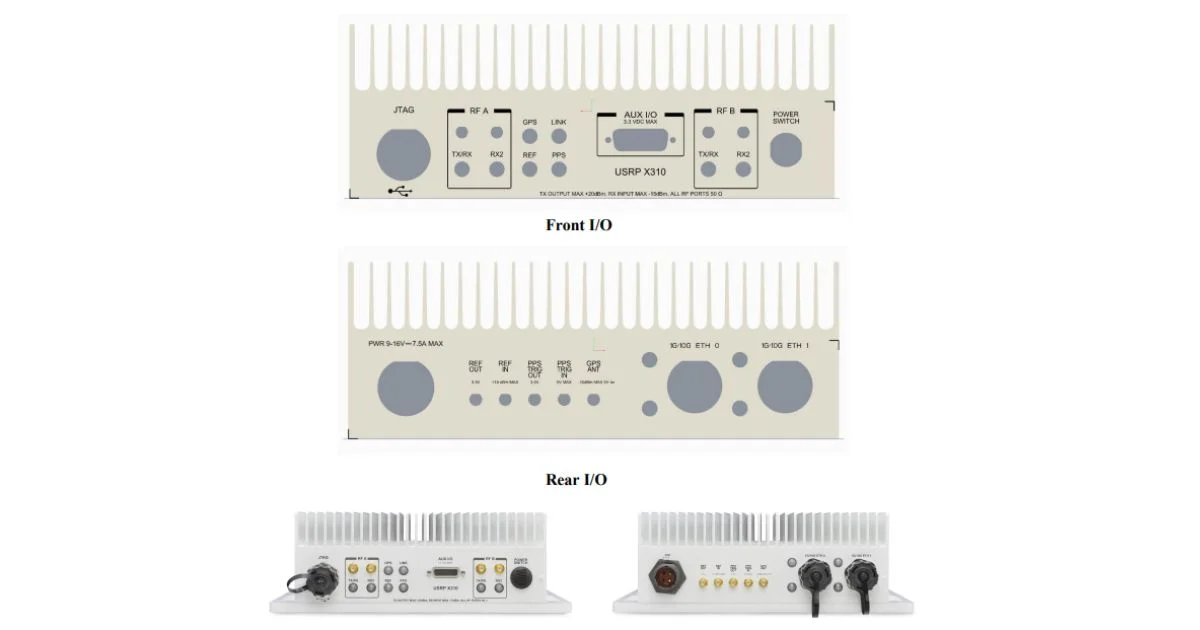
This ability to detect, identify, and neutralize makes the SDR an incredibly powerful C-UAS tool. But all this advanced software processing is worthless if the hardware can't survive the mission.
A standard, commercial-off-the-shelf (COTS) SDR is a sensitive piece of equipment that would quickly fail in an operational environment. Military-grade SDRs must withstand installation in mobile (land, sea, or air) or pole-mounted outdoor environments. This is why ruggedization is essential.
True ruggedization comes from a total system approach to design that ensures the SDR can deliver reliable performance in conditions that would destroy standard electronics.
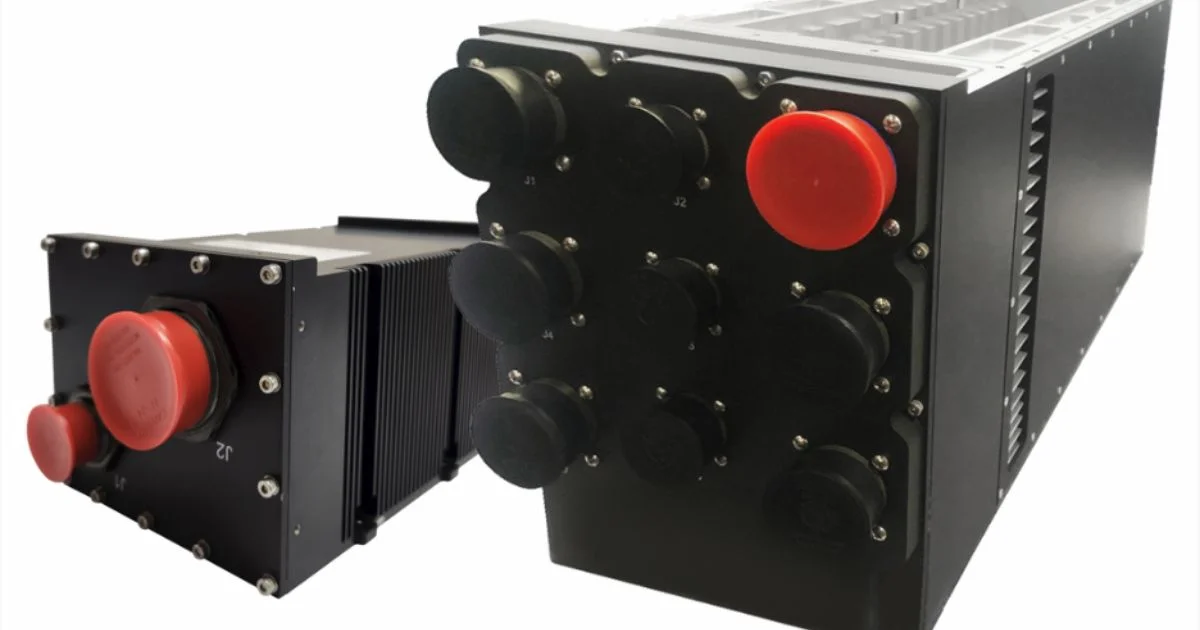
This begins with its enclosure, which must be sealed to protect the sensitive electronics from contaminants like dust and moisture. At the same time, the system must manage extreme temperatures, handling both ambient heat and the heat generated by its own components. Fanless conduction-cooled or air-cooled enclosures offer a highly resilient solution by using the chassis itself as a heat sink, eliminating fans (a common point of failure).
Build a Resilient C-UAS Front Line
An effective drone defense requires a layered detection/deterrence chain that combines data from multiple sensors. Within this system, rugged SDRs have the versatility to work in an identification, detection, or neutralization role depending on the circumstances.
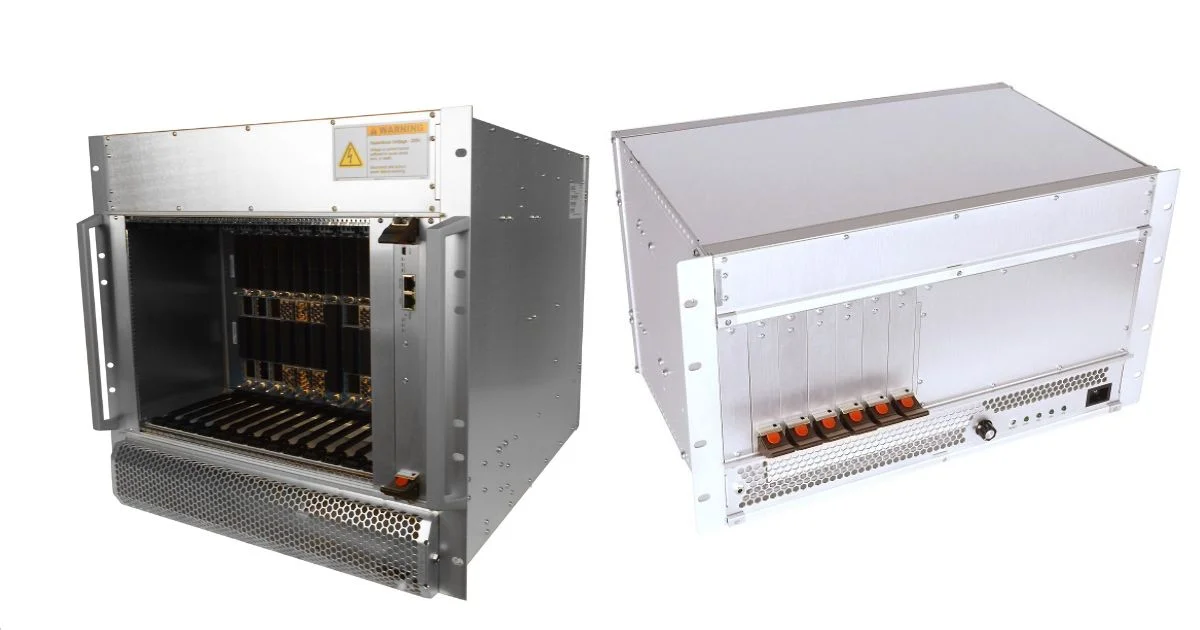
Deploying a rugged SDR for drone detection and deterrence requires expertise in both RF systems and rugged engineering. Pixus Technologies offers ruggedized versions of NI’s widely-used Ettus Research™ brand of USRP™ Software Defined Radios, including proven solutions for the X310, X410, X440, B210, E320, and N310 models.
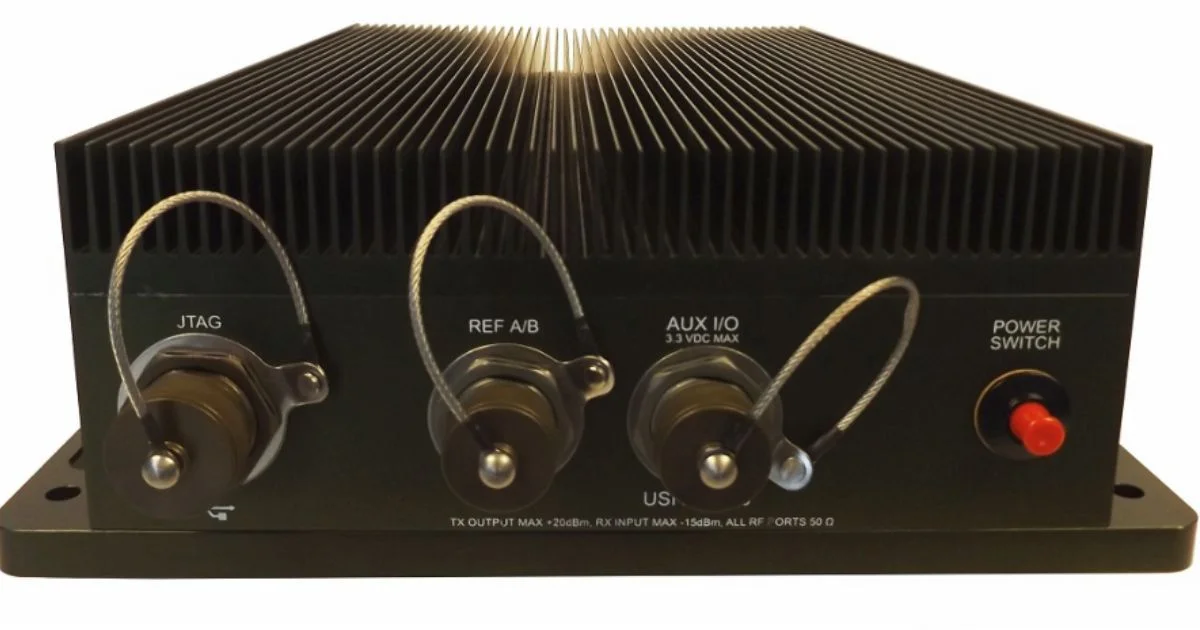
Each system is housed in a chassis that can be customized to meet specific mission requirements, with options like integrated heaters or fans to extend the operational temperature range. The enclosures can be ruggedized to meet the demands of MIL-STD-810 for shock and vibration and MIL-STD-461 for EMI as required. Pixus can also develop custom rugged enclosures for other NI USRPs, including the E series and other N and B series.
While drones represent one of the more visible and immediate spectrum challenges, they are just one piece of a much larger picture. Across the defense landscape, control of the electromagnetic spectrum is a foundational requirement that powers everything from tactical communications to high-end electronic warfare systems. Our rugged SDRs have also been deployed for signals intelligence (SIGINT), electronic warfare (EW), and many other demanding applications.
Contact Pixus Technologies to discuss how we can adapt these proven platforms (or develop a new one) to meet the requirements of your mission.